
Roof leak repair for a leaking roof on Emerald Coast homes
Florida roofing contractor since 2010. Licensed, insured and bonded. GAF Certified.
A roof leak rarely starts where the stain shows up. LJB Construction & Roofing finds the source of the leaks, then fixes that spot on shingle, metal and tile roofs.

Key Takeaways
A ceiling stain is a clue, not the leak. Water can run across the roof deck before it drips.
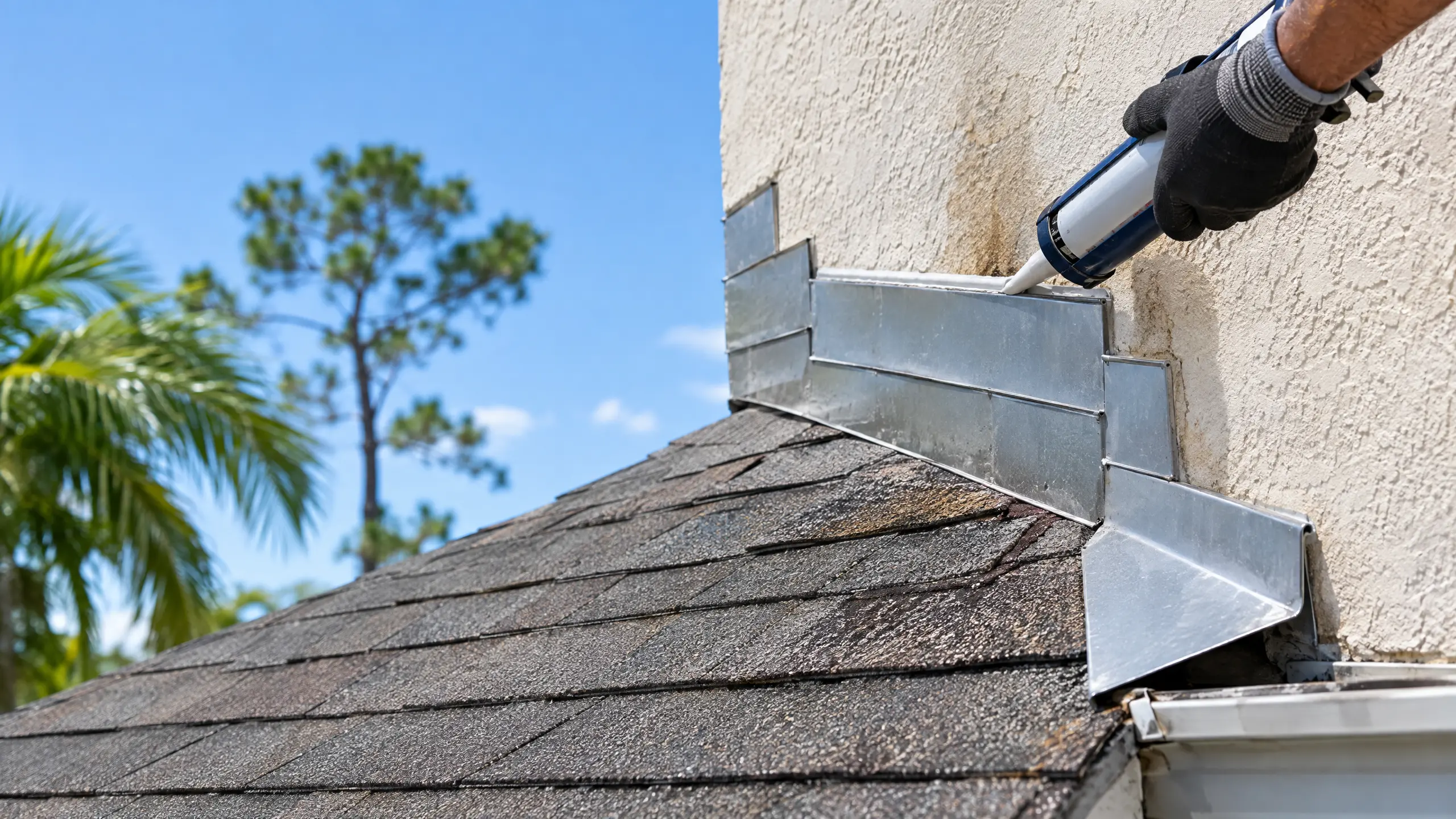
Most leaks start at flashing, pipe boots, valleys or metal fasteners.
We find the source, explain what failed and fix it to the Florida Building Code.
Warning Signs
Signs of a roof leak, from water spots to active drips
Most leaks show up inside the house before anyone sees a problem on the roof. Watch for these:
Brown or yellow stains on the ceiling
Paint that bubbles or peels on an upper wall
A musty smell, moisture, or mold in the attic
An active leak dripping from a light fixture or vent
Dark spots on the wood under the roof
Rusty nail tips on the underside of the roof
A leaky roof gets worse with every rain, and the water damage spreads long before a drip shows. If you see one of these signs, call (850) 588-3131.
How water travels
Why the ceiling stain isn’t where the gets in
Water that gets under the roof covering doesn’t drop straight down. It runs along the roof boards and rafters until it reaches a low spot or a nail it can drip from. A stain in the hallway can start a failed pipe boot across the house.
That’s why a patch on the spot above the stain often fails. The leak keeps coming back from the real source. We find the source first. Then we fix it.
Where to Look
Common sources of roof leaks
Where the stain shows up gives a first clue to where the water gets in.
| What You See | Where It Usually Starts |
|---|---|
| A stain near a chimney or an outside wall | Flashing where the roof meets the chimney or wall |
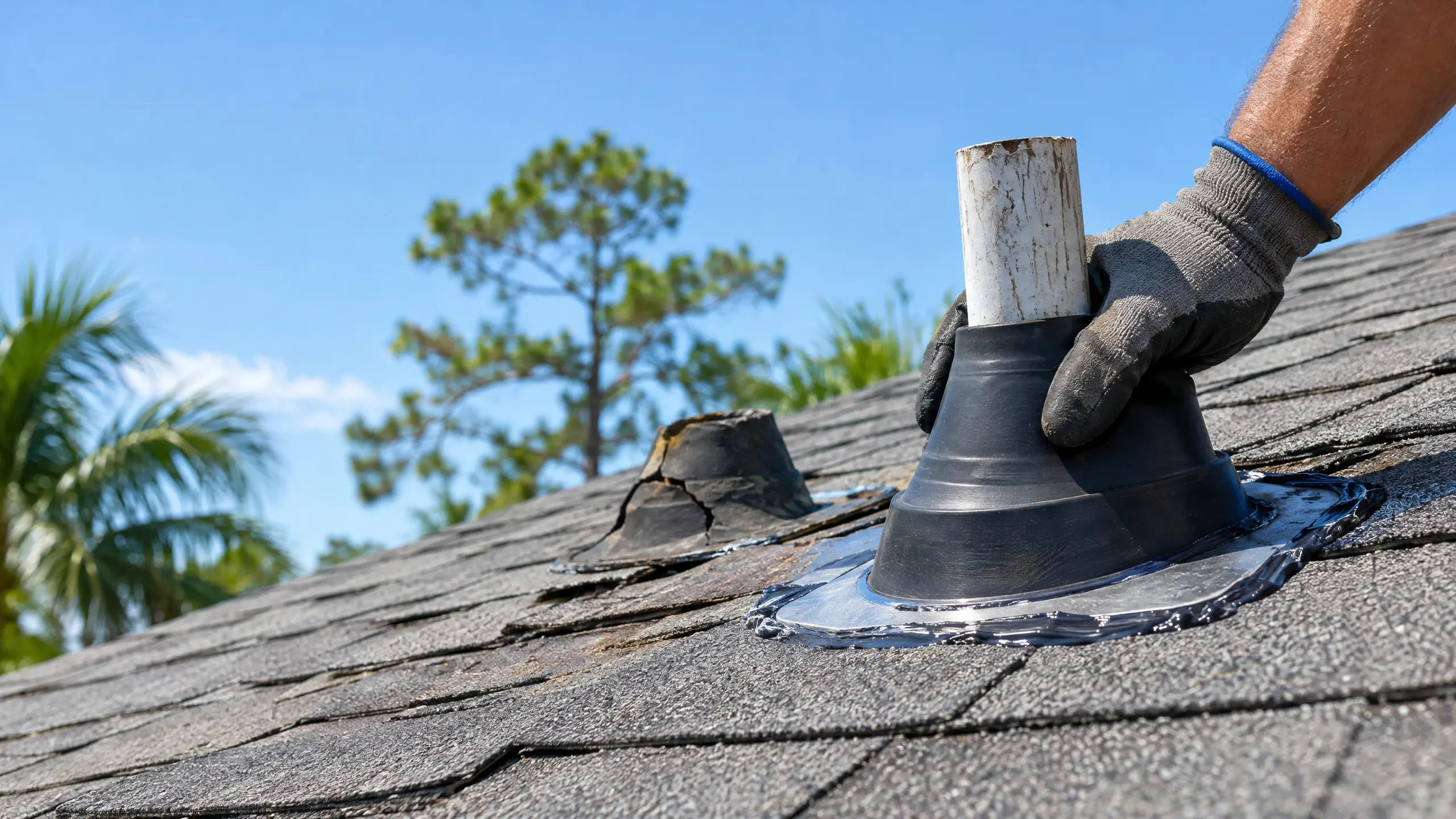
| A stain below a bathroom or kitchen vent | The pipe boot around the vent pipe |
| A stain along the line where two roof slopes meet | The valley |
| Water at the top of an outside wall or at the eaves | The drip edge, or gutters backing up under the roof edge |
| A stain around a skylight | The seals around the skylight |
| Spots under a metal roof after rain | Loose or rusted fasteners, or an open seam |
| A leak under a tile roof | Worn underlayment beneath a cracked or slipped tile |
| A wet spot when it hasn’t rained | Often not the roof (see “Is it the roof?” below) |
These are starting points, not answers. The only way to know is a roof inspection, inside and out.
Most Common
Flashing, pipe boots and roof penetrations
Roof penetrations are where leaks start most often. Each one is a seam where roofing materials meet metal, rubber or a wall, and those seams break down in the Florida sun. A cracked rubber pipe boot lets water run down the pipe into the house. That’s why we check every penetration near a leak, not only the one closest to the stain.
Local Conditions
Why Emerald Coast roofs leak
Most leaks here come back to a few local conditions.
Heavy, wind-driven rain
Summer storms push rain sideways and force it up under shingles and trim that stay dry in a light rain. If you have a roof leaking during heavy rain but not in a light shower, this is the likely cause. The leak usually sits on the side of the roof that faces the wind.
Salt air
Salt air off the Gulf wears on metal. Screws, flashing and vent collars rust faster near the water. Once a screw rusts or backs out, rain follows it in.
After a storm
High wind can lift shingles and break their seal without tearing them off. A leak can show up days after the storm has passed. For what to check after a storm, see storm damage roof repair.
Is it the roof?
Not every ceiling stain is a roof leak. In homes with the air handler in the attic, a clogged AC drain line can overflow on a dry, sunny day. Florida humidity can also cause condensation on cold ducts that drip into the room below. If a stain grows when it hasn’t rained, have your AC checked too.
Our Process
Leak inspection and source tracing
Roof leak detection starts inside and finishes on the roof. Here’s how a roof leak inspection with our roofing team works:
1
Tell us what you see. Where the stain is, when it shows up and whether it follows the rain.
2
We check the attic. We follow the water marks on the deck and rafters back toward where they start, where we can reach them.
3
We check the roof above it. We look at the flashing, pipe boots, valleys, and roofing materials around the area.
4
We explain what failed. You hear what let the water in before we talk about the fix.
5
You get a written estimate. It lists the repairs we’ll make.
6
We fix the source. The work is done to the Florida Building Code.
By Roof Type
Roof leak repair services by roof type
Each roof type has its own weak spots. That’s where we look first.
Shingle roof
Shingle roofs leak most where something breaks the surface: pipe boots, vents, and the joint where the roof meets a wall. Valleys are next, since they carry the most water. We replace the failed boot, flashing, or shingles at the source.
Metal roofs
On a metal roof, we check the screws first. The rubber washers under the screw heads dry out and crack in the Florida sun. Open seams and the trim at ridges and walls come next. We replace failed screws and reseal the seams.
Tile roofs
A leak under tile is usually an underlayment problem. Tile can look fine from the ground while the layer under it has worn through. We check the layer beneath the tiles around the leak and replace any cracked or slipped tile.
While You Wait
What to do until we get there
A few steps limit the damage while you wait for us:
Put a bucket or towels under the drip and move furniture and electronics out of the way.
If water comes through a light fixture, turn off that circuit at the breaker.
If the ceiling sags with water, keep everyone out from under it.
Take dated photos of the stain and any wet areas for your records.
Stay off the roof, especially while it’s wet.
Then call (850) 588-3131 and tell us where the water is showing up.
Repair or Replace
When a repair isn’t the answer
One leak from one source is usually a repair. Leaks in several places, or a leak that keeps coming back after you fix it, can mean your roof is near the end of its life. Our roof replacement page lists the other signs. If you already know the problem, like a missing shingle or loose flashing, see roof repair.
Service Area
Where we work
LJB fixes roof leaks on homes across the Emerald Coast, in Okaloosa County, Walton County, Bay County, and nearby. Our office is in Santa Rosa Beach.
Nearby:
Licensed and Insured
Licenses, permits and the roofs we repair
A leak often causes damage beyond the roof. LJB holds a roofing license (CCC1337902) and a general contractor license (CGC1538749), so one company can fix the roof and replace wet decking under it. We’re licensed, insured and bonded, GAF Certified and an Atlas PRO+ contractor, and we’ve been a Florida roofing company since 2010.
Whether leak repairs need a permit depends on their size and on your city or county. We check with the building office and pull the permit when it’s required. We repair leaks on shingle, metal, and tile roofs, and you see the price before any work starts.
Certifications & Memberships
Reviews
What homeowners say
“LJB Construction & Roofing provided outstanding quality and excellent service for our shingle roof repair. Daniel was on time for the scheduled appointment and provided clear feedback regarding the repair process. We were treated fairly and honestly by the LJB team. We will be sure to call LJB when we have any roof or construction related repairs.”
Beth Appel
Google Review
“We had a great experience using LJB Construction to repair our roof. They were quick, communicative, and professional throughout the entire process. They made sure the work was done correctly and took the time to ensure everything met their quality standards. We really appreciated how easy they were to work with. We have already & will continue to recommend them!”
Joel Dillon
Google Review
FAQ
Roof leak repair FAQ
Why does my roof only leak in heavy rain?
Wind-driven rain gets under shingles and past flashing that holds up in a normal rain. The leak usually sits on the side of the roof that faces the wind. We can find the gap by checking the seams on that side.
Where is a roof most likely to leak?
Around anything that breaks through the roof: pipe boots, vents, chimneys and skylights. Valleys and the joint where a roof meets a wall come next.
Can you fix a roof leak from inside the attic?
You can often trace a leak from below, but you can’t fix it there. Anything put on the underside of the roof boards only hides the problem. The repair has to be made on the roof, where the water gets in.
How long can a roof leak before it causes damage?
Damage starts with the first rain. Water soaks the deck, insulation and drywall before a drip shows. The EPA advises drying water-damaged areas within 24 to 48 hours to prevent mold growth, so call as soon as you see a stain.
Will Flex Seal fix a roof leak?
It can slow a small leak for a short time, but it doesn’t fix the cause. A product sprayed over shingles or metal can also make the real repair harder, since it has to come off first. Use patch only as a stopgap until a roofer fixes the source.
How much does it cost to fix a roof leak?
It depends on what failed and how far the water damage spread. A loose pipe boot is a smaller job than flashing at a chimney. Wet decking, tile that has to be lifted and steep or high roofs add to the cost.
More services
Other residential roofing services
Other residential roofing services from LJB:
Find the leak before it spreads
Call LJB Construction & Roofing. We’ll trace the leak to its source and give you a price in writing.