
Storm damage roof repair for Emerald Coast homes
Florida roofing contractor since 2010. Licensed, insured and bonded. GAF Certified.
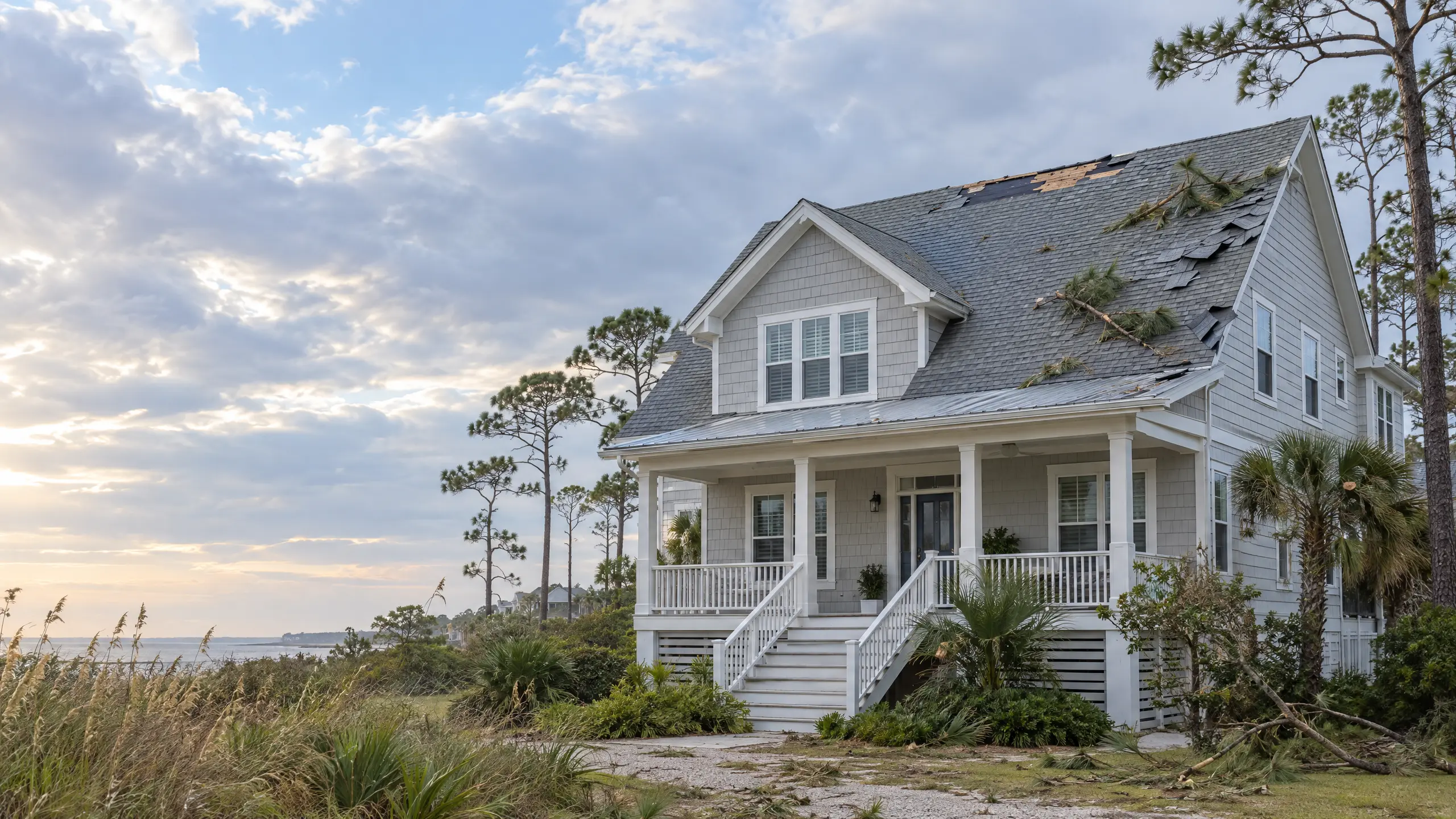
Wind, flying debris, and driving rain can lift shingles, bend metal, and crack tile. Small damage lets water into your home long before it shows on a ceiling. LJB finds the storm-related damage and repairs it to the Florida Building Code.

Certifications & Memberships
After the storm
What to do after a storm damages your roof
Stay safe first. Then record what you see and call a licensed roofing contractor.
Stay off the roof. Wet surfaces and loose materials make falls likely.
Stay clear of downed power lines near the house.
Take photos from the ground: bare spots, slipped tile, bent metal and limbs up top. Inside, photograph stains and drips.
Protect what’s inside. Put buckets under drips and move furniture and electronics away from wet areas.
Call LJB at (850) 588-3131 or request an estimate.
What to look for
Signs of storm damage on your roof
Hail damage or wind-damage starts with knowing what to look for. Some damage is easy to see from the yard. Hidden damage only shows up up close or inside the house.
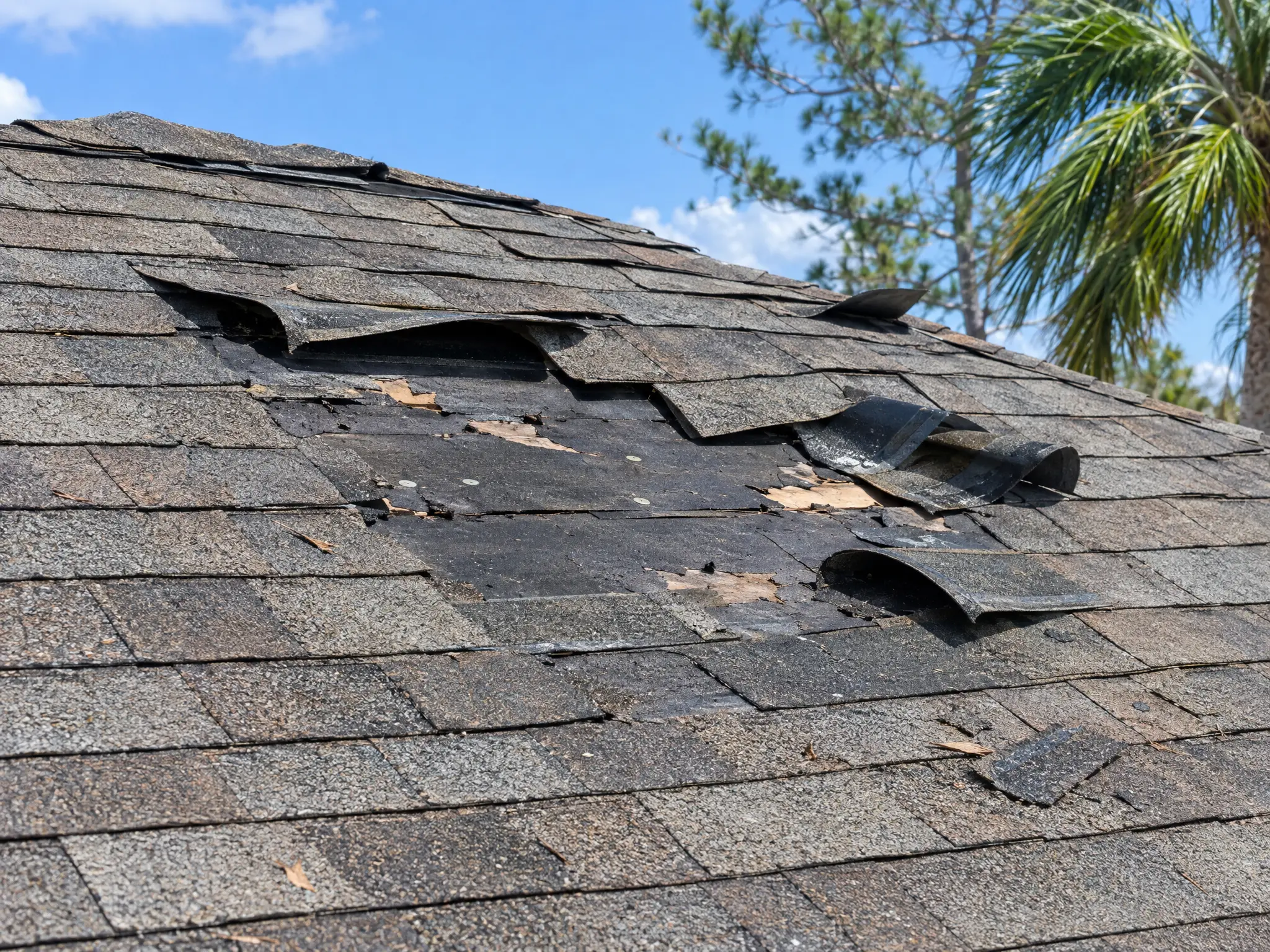
Shingle roofs
Look for missing shingles or bare spots, creased shingles or lifted tabs where wind bent them back, granules piled in gutters or at downspouts, exposed underlayment where shingles tore away, and loose or missing ridge caps.
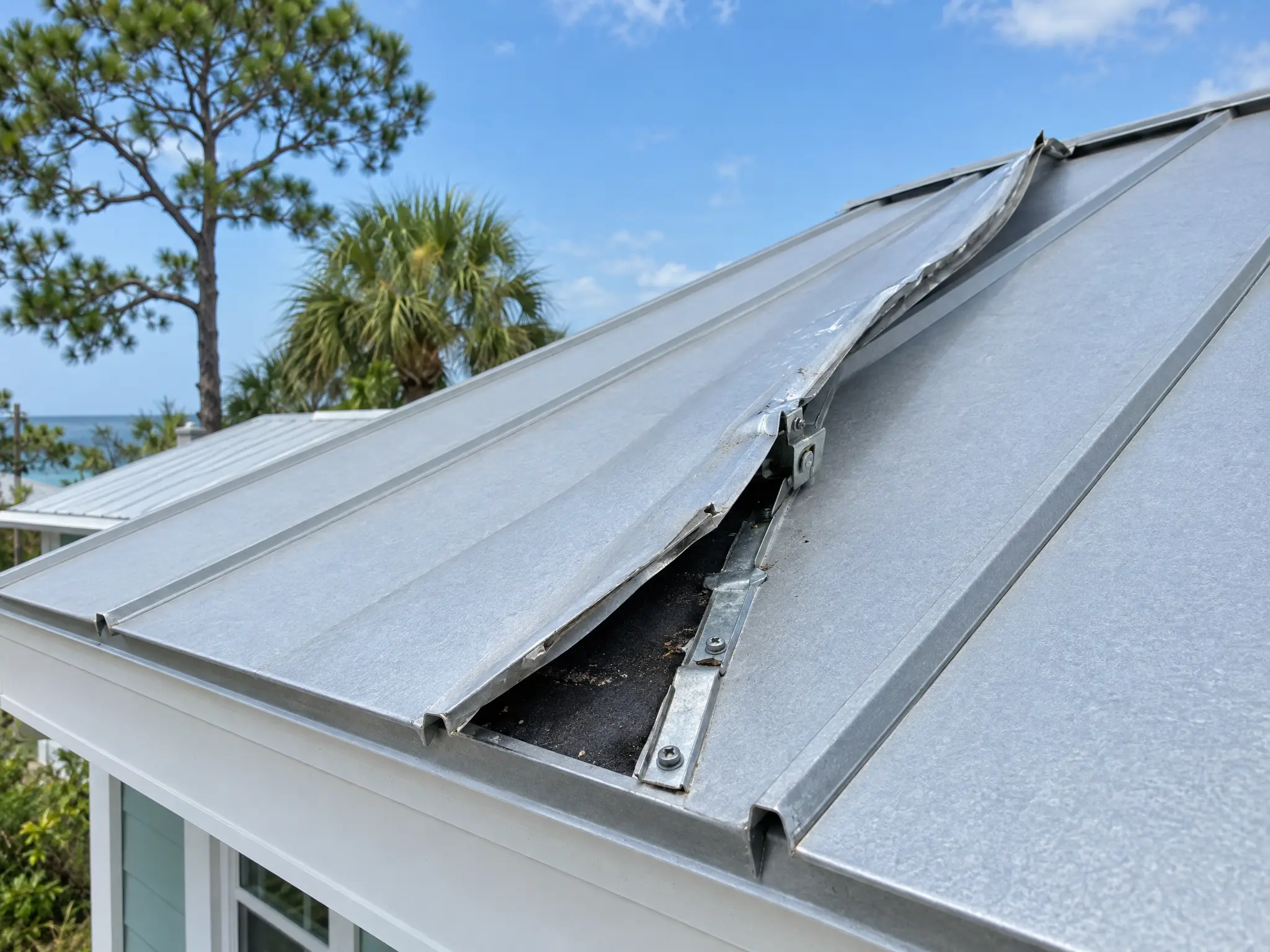
Metal panels and trim
On a metal roof, check for loose, backed-out or missing fasteners, panels lifted at the edges or seams, bent trim, ridge cap or flashing, and dents or punctures from limbs and blown objects.
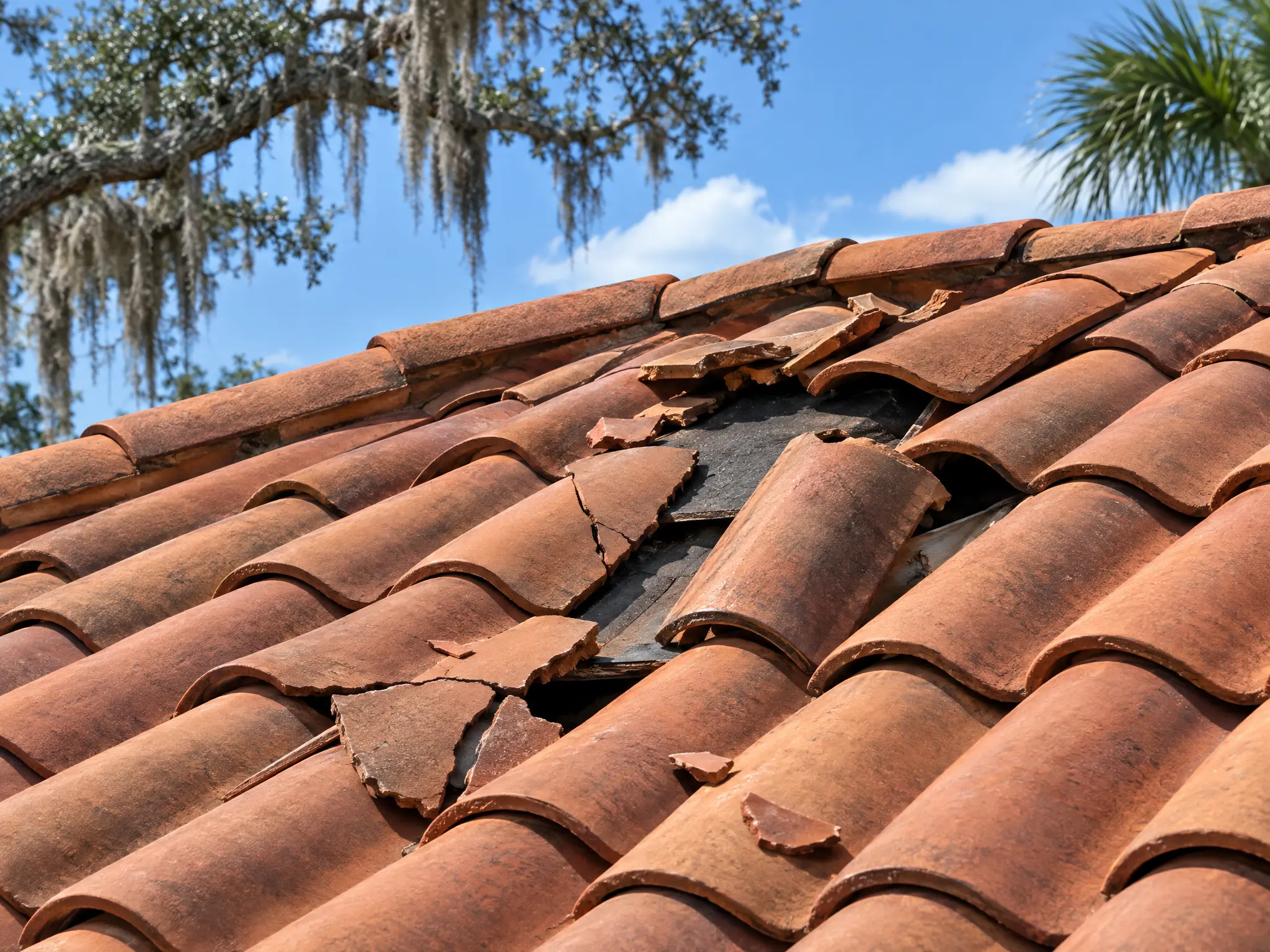
Tile and ridge caps
On a tile roof, watch for cracked or broken tiles, tiles that slipped out of place, and loose or displaced ridge and hip tiles.
Wind damage on every roof type
Also check for lifted or torn flashing at walls and chimneys, damaged vents and pipe boots, and branches or limbs still lying up top.
Signs inside
Watch for new water stains on ceilings or walls, drips during rain, and damp or matted insulation in the attic. Stains can show up days or weeks after the storm, once water soaks through the wood.
If water is already coming in, see roof leak repair.
Seeing any of these?
Our Process
How LJB handles storm damage repair
Our team follows the same steps on every job after a storm.
1
Inspect
We start with a storm damage inspection of the whole roof surface and edges, and look inside where water shows.
2
Photograph
We take photos and walk you through the damage assessment.
3
Written estimate
You get it before any work starts.
4
Permit
LJB pulls the permits the job needs.
5
Repair
Crews replace damaged materials to meet current code.
6
Inspection
When the job calls for one, it closes with the building department’s inspection.
Temporary vs permanent repairs
A tarp or patch only buys time. Sun and weather break down tarps, so the permanent fix should follow soon after. A permanent repair replaces what the storm damaged, stops the leaks for good and is built to code.
Cost
What affects the cost of a storm repair
Every repair after a storm is priced from what we find. Two repairs that sound the same on the phone can be very different jobs. These are what change the price:
Roof type and matching. Some tile profiles and shingle colors are no longer made, so matching takes longer.
How far the water spread. Water damage to the decking adds work,
Pitch and height. Steep, two-story jobs need more safety setup.
How many areas were hit. One lifted section costs less than damage on several slopes.
Code work. Any upgrades the repair triggers under current code.
What a price?
Repair or replace
Roof damage: repair or replace?
Most damage from a storm can be repaired. Florida’s 25% rule decides when a repair turns into more.
The 25% rule
Florida code limits how much of a roof can be repaired or replaced in 12 months. Past 25%, the whole section has to meet current code. A roof section is an area set apart by things like parapet walls, expansion joints, a change in roof height or a different roof type.
The 2007 code exception
There is an exception. If your roof was installed or replaced under the 2007 FL Building Code or later, only the repaired part has to meet current code (Florida Statutes 553.844(5)). The permit history usually shows when it was installed.
If damage is spread across several slopes, a roof replacement can make more sense than a large repair. See roof replacement.
Permits
Permits and the 2026 Florida Building Code
LJB pulls the permits storm repairs need. Permit rules depend on where you live. Unincorporated areas like Santa Rosa Beach permit through the county. Cities like Destin and Fort Walton Beach run their own building departments.
The state’s Building Code 9th Edition (2026) takes effect on December 31, 2026. Permits applied for on or after that date follow the new edition.
Talk to us about what the storm did.
Choosing a roofer
Hiring a roofer after a storm in Florida
After a big storm, roofers from all over show up. Four checks protect homeowners.
Check the license. Roofing contractors in Florida must be licensed. Look them up at myfloridalicense.com. LJB holds roofing license CCC1337902 and general contractor license CGC1538749.
Look for a local office. Crews that follow storms from out of state may be gone when a repair needs attention. LJB is a local roofing company working from 68 Cox Rd in Santa Rosa Beach.
Get a written estimate before you sign anything.
Know your right to cancel. If the Governor declared a state of emergency for the storm, Florida law lets you cancel a roof repair or replacement contract signed within 180 days of it. You have 10 days after signing or until the official start date, whichever comes first (Florida Statutes 489.147(6)).
Local Conditions
Hurricane season on the Emerald Coast
What coastal roofing is up against:
Hurricane season runs June 1 to November 30. A tropical storm can bring hours of high winds and wind-driven rain.
Summer thunderstorms bring sudden gusts and heavy rain that find leaks at every seal and seam.
Salt air near the Gulf wears down metal parts and exposed nails faster than inland.
Much of the coast falls in the state’s wind-borne debris region, with stricter rules for roofs and openings.
A storm often finishes off an area that salt and sun had already weakened. That’s why we check the whole roof, not only the spot that failed.
Service Area
Storm damage roof work across the Emerald Coast
LJB provides storm damage repair to homeowners in Okaloosa County, Walton County, Bay County and Santa Rosa County. Our office is at 68 Cox Rd, Santa Rosa Beach, FL 32459.
Communities we serve:
Reviews
What homeowners say
“Absolutely outstanding service from start to finish! They were professional, responsive, and incredibly easy to work with. They showed up when they said they would, answered every call, and did an excellent job repairing my roof. The pricing was very reasonable, and the work was completed quickly and efficiently without sacrificing quality. .
It’s refreshing to find a company that actually follows through, takes pride in their work, and makes the entire process stress-free, I couldn’t be happier with the experience and would highly recommend them to anyone needing roofing work. Five stars all the way!”
Rebecca Mcgee
Google Review
“I had a great experience with this roofing company! The team was extremely professional and went above and beyond to make sure my roof was repaired the same day. Their dedication to getting the job done quickly and efficiently was truly appreciated.
A special thank you to Daniel, who was incredibly helpful, knowledgeable, and professional throughout the entire process. His excellent customer service made the experience even better.”
Skye Br
Google Review
More services
Residential roofing services
Other residential roofing services from LJB
LJB also handles commercial roofing for condos, HOAs, and businesses.
FAQ
Roofing FAQs after a storm
What damages a roof in a storm?
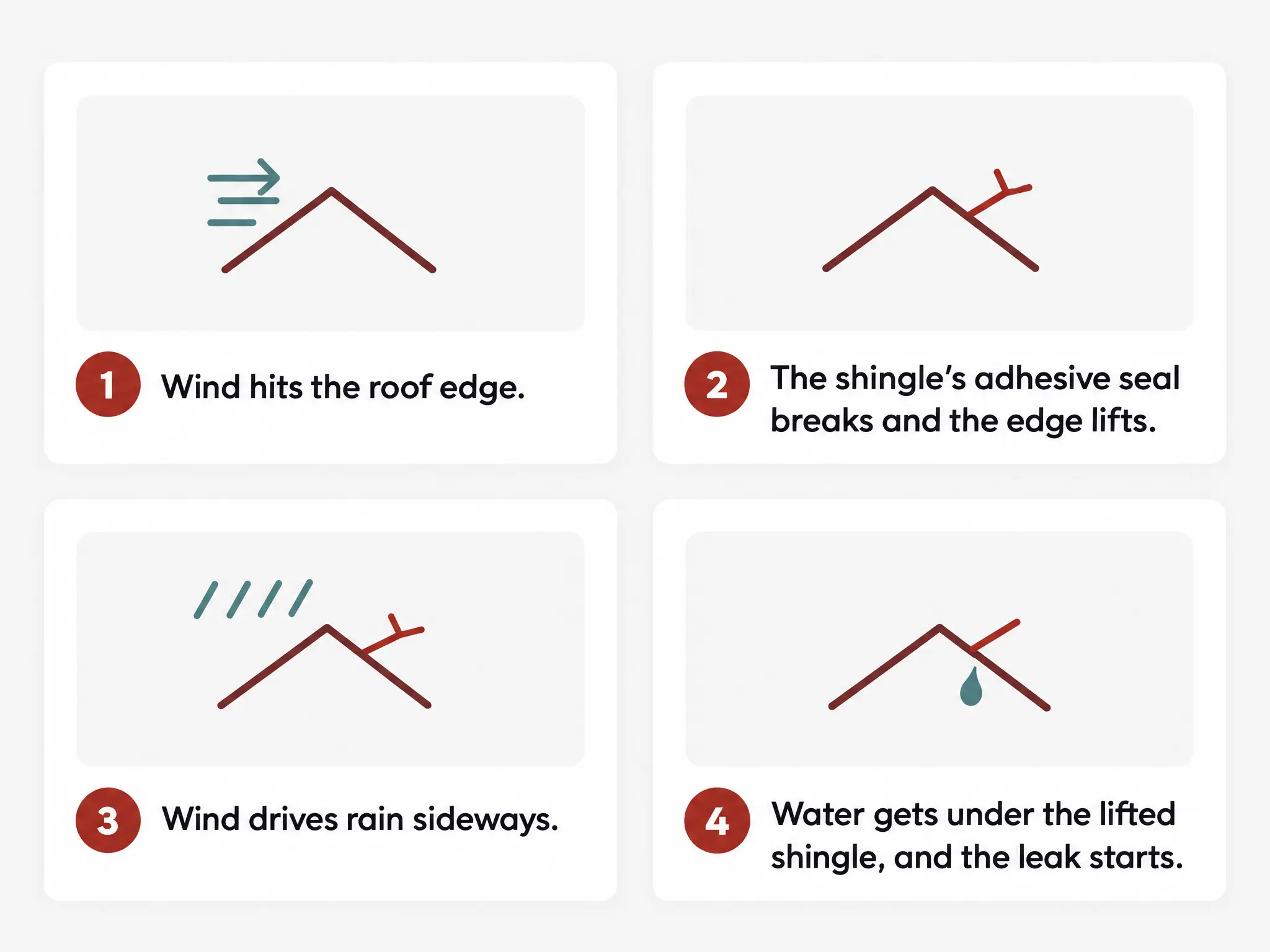
Wind does most of the damage. It lifts shingle edges, loosens nails and peels back flashing. Blown objects and falling limbs crack tile and dent metal. Rain then gets in wherever the roof was loosened.
How do I know if my roof has storm damage?
From the ground, look for missing or lifted shingles, slipped tile, bent metal and limbs up top. Inside, look for new ceiling stains or drips. Some damage only shows up close, so a roof inspection is the surest check.
Should I fix storm damage on my roof myself?
Don’t climb up. Wet and loose materials make falls likely. Catch drips inside, move your belongings and call LJB.
I’m seeing a ceiling stain weeks after a storm. Could it be storm damage?
It could be. Water can soak into the roof deck and take days or weeks to show inside. Have it inspected before the stain spreads.
Can storm damage be repaired, or do i need a new roof?
Most of it can be repaired. Florida’s 25% rule can require more when a large share of a roof section is damaged. Roofs installed under the 2007 code or later are exempt. We’ll tell you which rule applies.
Is it worth repairing an older roof after a storm?
If it has good years left, a repair is usually the right call. If it’s near the end of its life, a replacement can make more sense. We’ll explain both options for your roof.
Do storm repairs need a permit?
Many do, and the rules depend on your city or county. LJB pulls the permits the work requires.
How do I check a roofer’s Florida license?
Search the contractor’s name or license number at myfloridalicense.com, the state’s license lookup. LJB holds roofing license CCC1337902 and general contractor license CGC1538749.
Can I cancel a roofing contract I signed after a storm?
Often, yes. If the Governor declared a state of emergency for the storm, Florida law lets you cancel a roof repair or replacement contract signed within 180 days of it. You have 10 days after signing or until the official start date, whichever comes first.
Need storm damage repair?
Call us or request an estimate now.